
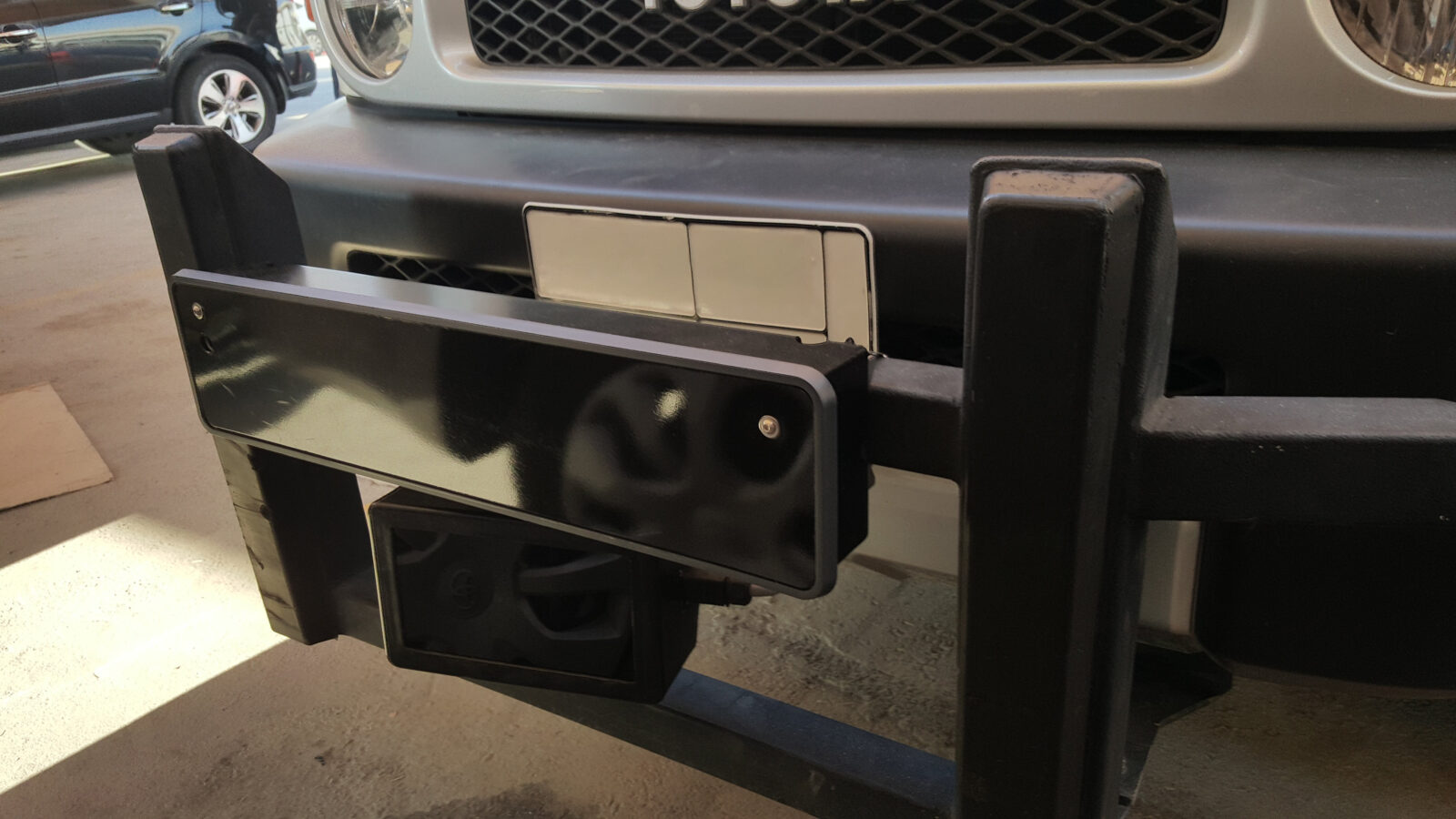
Overt or covert In-vehicle Speed Enforcement: The innovative tailor-made solution for improving road safety
The Sensys Gatso in-vehicle speed enforcement system represents a significant advancement in automated traffic enforcement, offering a flexible and highly effective tool for speed management. Depending on the choice of the client, it can be used in covert or overt traffic enforcement. Its introduction in France and many other countries underscores its global impact, enthusiastic acceptance and significant contribution to improving road safety. The road safety benefits of the covert operation of these in-vehicle enforcement systems, if supported by an extensive well targeted multi-media awareness campaign, have been significant since they increase the subjective chance of apprehension significantly.
Understanding Key Enforcement Concepts
Before exploring the system's technology, implementation and effects, it is important to clarify some academic concepts in traffic enforcement (Source 1):
- Objective Chance of Apprehension: The actual, measurable probability that a traffic violator will be detected and penalized. This depends on factors such as the number of enforcement devices, frequency and duration of police patrols, police deployment hours for traffic enforcement activities and geographical coverage of enforcement activities.
- Subjective Chance of Apprehension: The perceived likelihood by drivers that they will be caught if they break traffic laws. Even if the objective chance is low, a high subjective chance — created by unpredictable, covert, or widely publicised enforcement at unknown locations — can strongly influence driver behavior and thus improve road safety.
- General Deterrence: The preventive effect on the general driving population, achieved when drivers modify their behavior due to the perceived risk of being caught, not necessarily because they themselves have been penalized.
- Specific Deterrence: The preventive effect on individuals who have already been apprehended and penalized, discouraging them from reoffending.
Of the above concepts, the Subjective Chance of Apprehension contributes most to improving road safety. For governments and the police this concept needs to be the basis on which an enforcement strategy needs to be built. This can be achieved by structuring and executing enforcement as follows (Source 2):
- Using highly visible and unpredictable enforcement: When drivers observe police presence or automated enforcement (such as speed cameras) at various locations and times, especially in an unpredictable pattern, their perception of the risk of being caught increases significantly.
- A mix of overt and covert enforcement: Combining visible police patrols with less visible or covert operations ensures that drivers cannot easily anticipate or avoid enforcement, further heightening perceived risk.
- Publicity and awareness campaigns: Public relations efforts and media coverage about enforcement activities amplify the perceived risk by reminding drivers that enforcement is active and ongoing.
- Random and selective checks: Conducting random breath tests or spot checks at different times and places, particularly where violations are common, makes detection seem more likely to the driver.
- Personal and indirect experiences: Hearing from e.g. colleagues or friends being fined or having personal experience with enforcement (such as receiving a ticket) reinforces the belief that detection is probable.
- Severity and certainty of punishment: The perception that penalties are both severe and very likely to be imposed both quickly and inescapably.
The Sensys Gatso in-vehicle enforcement system complies with the following aspects of the above mentioned points that increase the subjective chance of apprehension: unpredictability, random, covert, hard to anticipate, at different times and places.
As applies to all enforcement efforts, it remains essential that any enforcement action is accompanied by well-synched publicity and awareness campaigns across various media sources. With the launch of in-vehicle enforcement operations in France, publicity efforts were carried out very effectively, to the extent that the lower speeds on secondary roads were registered on a national level, in sync with the nationwide publicity campaign. However, for operational reasons the first batch of 30 vehicles remained limited to only a few administrative departments of France. This shows how regional enforcement efforts can be leveraged, at least temporarily, by effective publicity to achieve nationwide effects.
The Challenge of Secondary Roads
A critical issue in road safety is that secondary roads (including national (non-motorway) and country roads) are known to be the most dangerous in national road networks. Compared to local roads and motorways, secondary roads consistently record the highest rates of severe crashes and fatalities. The reasons are obvious; lanes are mostly narrower, many often straight junctions, often shared with vulnerable road users, lacking clear shoulders, often lined with trees and lacking guard rails, less well maintained compared to motorways. Vehicles passing each other on roads, mostly without a divider, with high speeds. Depending on the country, most of these roads have speed limits of 80, 90 or 100 km/h. That means an impact of at least 160 km/h in case of a head-on crash. Such crashes are usually deadly.
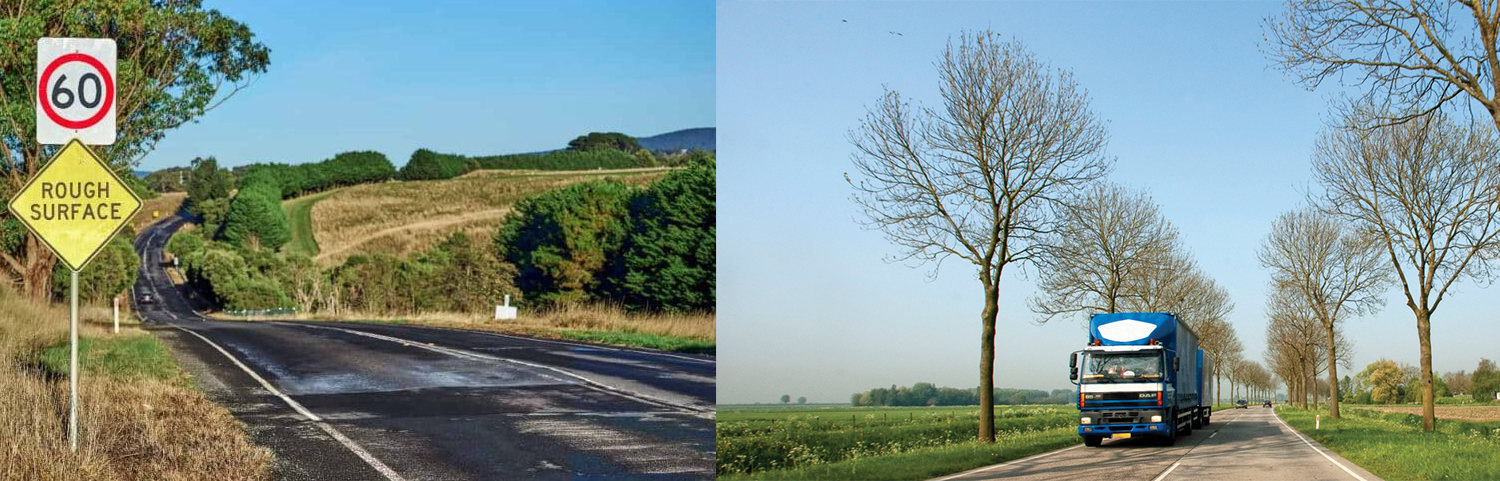
Secondary roads are also an extensive and lengthy category in any country’s road network. For example, in France, secondary roads cover more than 375,000 km —far surpassing the length of motorways and other primary roads. With more than 700,000 km, local roads are the largest category in France. Due to their fine detailed capillary structure speeds tend to be lower on these roads.
Equipping such a vast network with fixed speed cameras or other speed management measures is not feasible, practically, logistically and financially. Additionally, police resources are always stretched thin, making it impossible to provide adequate levels of manual enforcement on all these roads. This creates a significant enforcement and road safety gap, leaving secondary roads under-policed, very susceptible to speeding and therefore dangerous. Hence, the terrible statistical crash and casualty records of these secondary roads. The French Ministry of the Interior was acutely aware of this and acted. With this moving covert in-vehicle enforcement concept they could effectively cover a huge road network with a relatively limited number of cameras.
The Challenge of Speed Camera Location Information
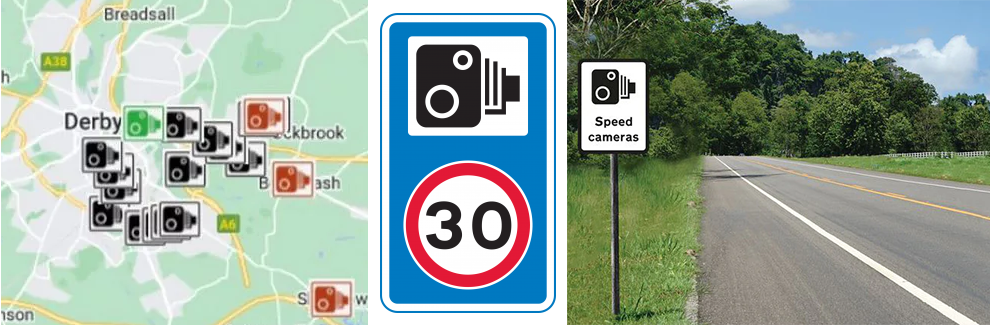
One significant challenge to effective road safety enforcement is the widespread availability of enforcement location information through satnav systems, mobile phone apps like Waze, Range and social media. These tools alert drivers about the exact locations of fixed speed cameras and even temporary police actions, such as laser gun or tripod speed camera operations. In several countries usage is prohibited and also fined e.g. France (€1500), Germany (€75) and Switzerland (€200) (Source 3). Despite fines, use remains widespread.
While some argue this helps drivers avoid fines, it actually undermines the authorities’ efforts to promote consistent safe driving behavior. Average speed enforcement (also called section control or point-to-point) and in-vehicle speed enforcement systems are not affected by this and governments are increasingly installing this equipment to counter the apps and devices that warn drivers about the enforcement locations.
The Benefits of Operational Flexibility
The in-vehicle system offers unrivalled operational versatility. This greatly benefits the productivity of police forces involved with traffic enforcement activities. This is mainly due to the fact that patrol cars can enforce the moment they leave the police station gate.
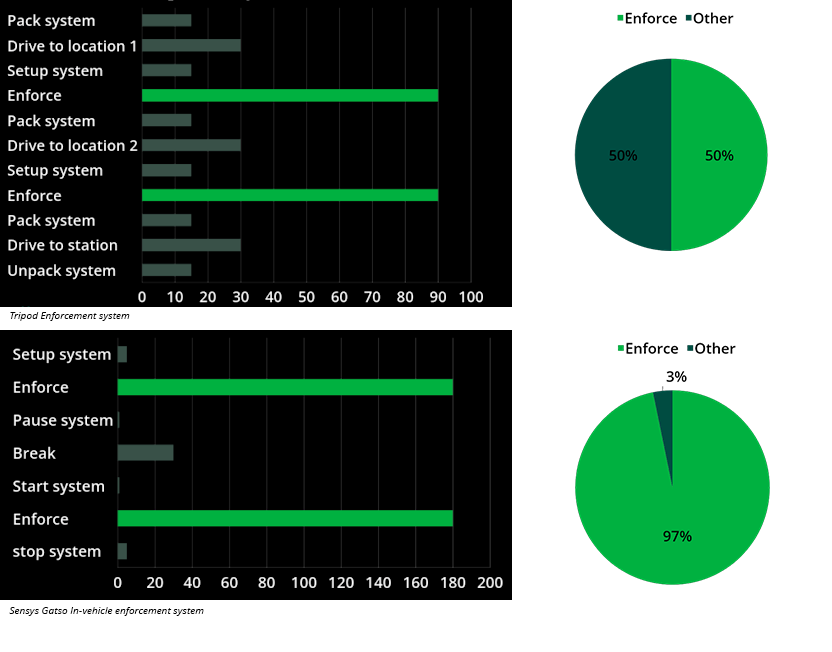
With tripod or laser gun speed enforcement operations, the police first load the system, check equipment battery status, drive to the designated enforcement location, then set up the tripod, mount the enforcement camera, start it up, align it properly, perform some checks and operational tests, including test images and only after this sequence can they become productive and start the actual enforcement operation.
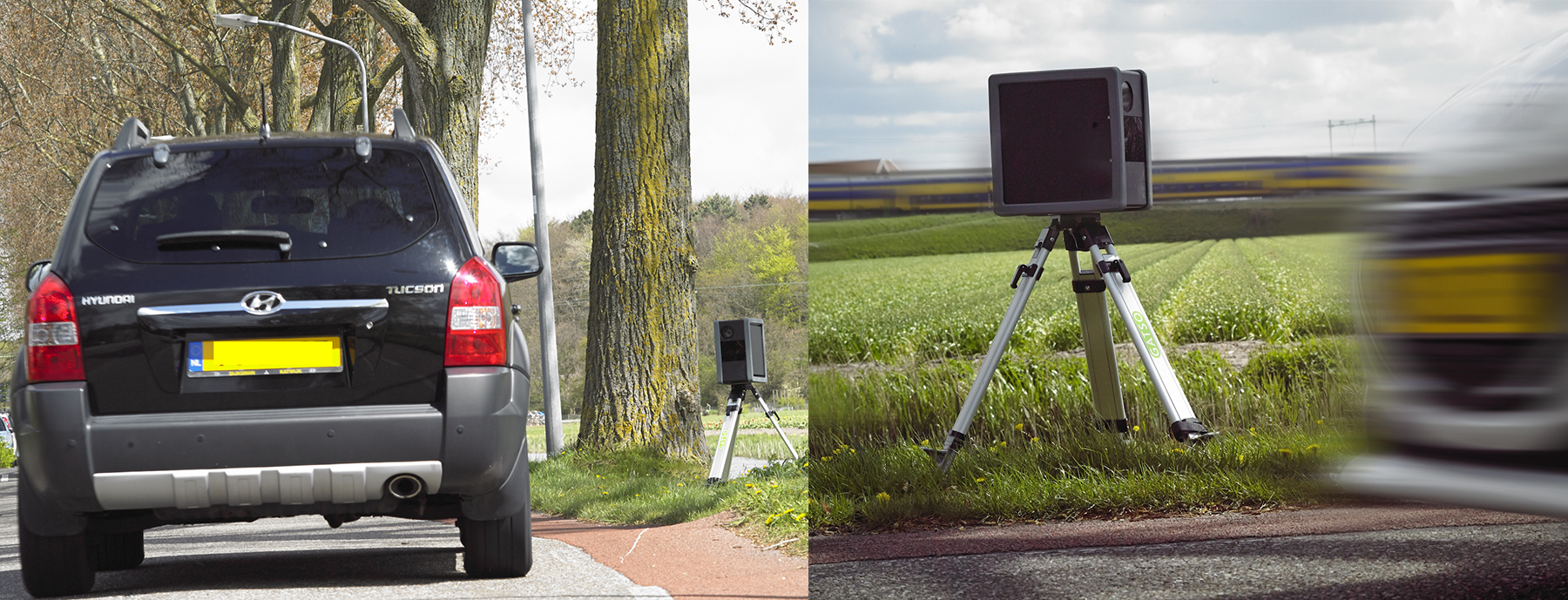
Moreover, news travels fast these days, and before you know it the location of the enforcement operation is shared on the internet, included in dedicated apps, navigation maps and social media, thus undermining the enforcement action. Due to these developments enforcement operations at given locations became significantly shorter. The tripod equipment then needs to be dismantled, re-packed, and re-loaded after say 2-3 hours and set up again at a new location, again further adding to in-efficiencies.
Low vs. optimal operational efficiency: Tripod compared to in-vehicle enforcement
There are more in-vehicle benefits. It can be used bi-directonally for speed enforcement of both approaching and receding traffic. Some countries use it in unmarked police vehicles that blend in regular traffic for covert enforcement. Others do it in a more overt way in regular patrol cars.
The other advantage is the fact that the in-vehicle system can be used both in a driving and in a parked stationary mode. The police park their car, eat their lunch, while the system keeps on recording violations.
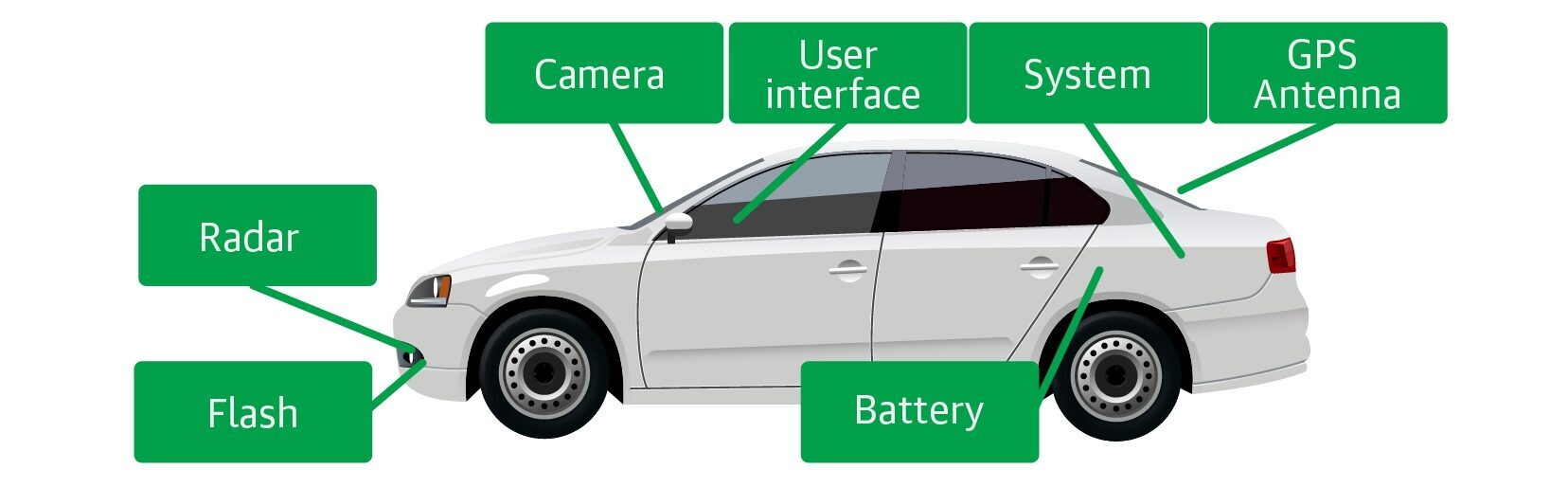
What’s in the box?
What systems and devices are installed to make in-vehicle traffic enforcement so versatile? Speed enforcement starts both with detection and measurement. This requires an onboard detector, in this case an advanced FMCW (Source 4) tracking radar which detects and measures the relative speed of the potentially speeding vehicle, referenced, when moving, for the direction and measurement of the current speed of the measurement vehicle i.e. the police car. The ‘ego-speed’ calculation of this car is based on the radar reflections while driving e.g. the road surface and fixed objects along the road.
The radar also detects if a vehicle is approaching or receding. When the radar detects a receding vehicle the own speed of the police car needs to be added to the radar speed measurement, if it is approaching it needs to be subtracted. If the police is measuring from a parked stationary vehicle the measured speed can be taken directly from the radar. When, based on this calculation compensated for the legally applicable grace speed of that jurisdiction, the target vehicle is speeding, the on-board camera mounted on the dashboard is triggered. Depending on the lighting conditions, the infra-red flash mounted under the bumper or in the grille flashes invisibly.
The friendly icon based user interface can be set for various speed regimes and other settings, including evidence review. Simultaneous with the photo and/or video, violation data are registered that besides speed also include the location and time of the violation as registered by the on-board GPS antenna. The whole system is powered separately by a dedicated battery installed in the rear of the enforcement vehicle, where the system box that controls all connected devices and processes is also located. Registered evidence is also securely stored in the system box. These encrypted evidence files can be sent directly to the public or private back-office server with a 4 or 5G mobile data connection, or stored on a USB stick or flash SDHC card depending on the client’s wishes. In this way the evidence files can be uploaded to the back office server during the enforcement operation or at the end of the working day or enforcement shift, as required by the client.
Introduction and Implementation in France
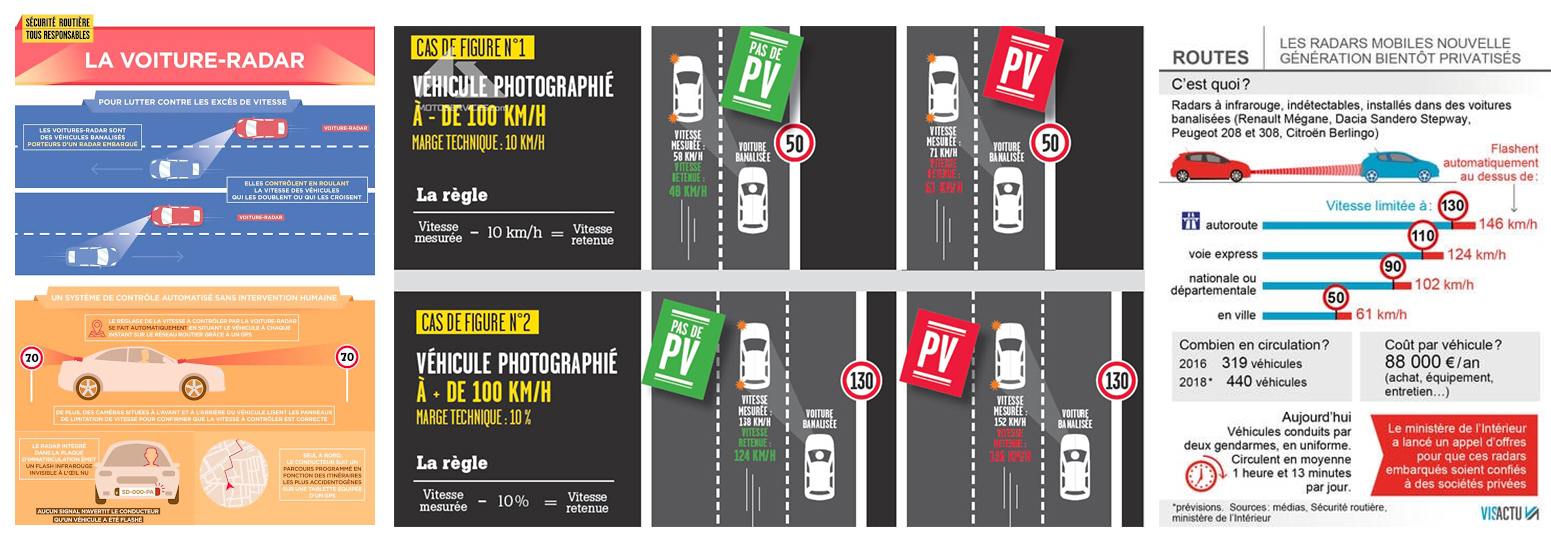
France pioneered the large-scale use of Sensys Gatso’s T-Series in-vehicle speed enforcement system as a solution to the challenges posed by secondary roads. The French authorities recognized that deploying traditional enforcement and speed management methods across over a million kilometers of secondary roads was not practical and feasible. Instead, they equipped unmarked police vehicles with the T-Series system, enabling flexible, mobile and stationary, and covert speed enforcement for both receding and approaching traffic across the entire road network.
The system’s intuitive, web-based interface enabled rapid deployment and operation by police officers without extensive training. Media coverage and a comprehensive multi-media PR campaign, combined with the covert nature of the system, dramatically increased the subjective chance of apprehension among drivers, leading to immediate road safety benefits. During the first six months of operation in France with only 30 systems in operation in a limited area, a nationwide reduction in road fatalities of 15% was recorded, saving approximately 250 lives. This success, due to an effective combination of enforcement technology and nationwide publicity, prompted the government to expand the program and purchase additional systems. (Source 5) The total now stands at around 660.
Reduction in Average Speed
While in driving enforcement mode the in-vehicle systems primarily detect and penalize the more serious speeding offenses, due to a higher technical grace speed (10 km/h under 100 km/h, 10% over 100 km/h), with fixed cameras and in stationary mode this is 5 km/h under 100 km/h and 5% over 100 km/h (Source 6). This means that they mainly fine drivers who significantly exceed the speed limit, not minor ones (Source 7). As mentioned and unlike fixed speed cameras, the in-vehicle enforcement systems operating in France are not marked and are integrated into the flow of traffic, making their presence unpredictable for drivers. This random nature is intended to encourage widespread compliance with speed limits, not just near marked speed cameras.
Since the introduction of automatic speed cameras (both fixed and mobile), a drop of more than 10 km/h in average speed has been observed on French roads, contributing to a 45 to 50% reduction in speed-related fatalities since 2003. In-vehicle enforcement systems, initially introduced in 2013, are part of this continuum, targeting drivers who have not changed their behavior despite the presence of fixed speed cameras. In the first half of 2013, when the deployment began, France recorded 257 lives saved compared to the previous year, a decrease twice as large as that observed during the same period the previous year. The number of people hospitalized after a road accident also decreased by more than 6% (Source 8). Although this decrease cannot be attributed solely to the addition of in-vehicle enforcement, their deployment is cited as an essential component of the strategy to combat excessive speed. In France patrol routes for cars with in-vehicle systems are chosen based on road sections where excessive speed is a frequent cause of accidents, thus maximizing their preventive effectiveness (Source 9). The number of unmarked in-vehicle system equipped patrol cars has gradually increased to nearly 660 vehicles deployed by 2025, providing significant national coverage and thus deterrence.
Further International Adoption
Spurred by the road safety success and operational flexibility in France, Sensys Gatso’s in-vehicle enforcement systems have been adopted in several other countries, including Bosnia, Ghana (Source 10), Qatar (Source 11), Saudi Arabia (Source 12) and the United States (Source 13) where they are used in either covert or overt operations, while parked or moving, or both, for enforcing receding or approaching traffic, or both. These countries have recognized the advantages of the flexible enforcement options, especially in regions and locations where traditional fixed cameras are less feasible or effective.
Enhancing the Subjective Chance of Apprehension
The unique strength of the Sensys Gatso in-vehicle system lies in its ability to blend with regular traffic, especially when installed in unmarked police vehicles. This unpredictability means drivers cannot anticipate enforcement locations, which greatly increases the subjective chance of apprehension, referred to in the introduction above. As a result, drivers are more likely to comply with speed limits at all times, not just at known camera sites, leading to broader and more consistent behavioral change. It is crucial to understand that for public acceptance and the best road safety results the introduction of covert in-vehicle enforcement needs to be well synchronized with a wide multi-media publicity campaign that explains the background, practice and road safety results of this type of traffic enforcement.
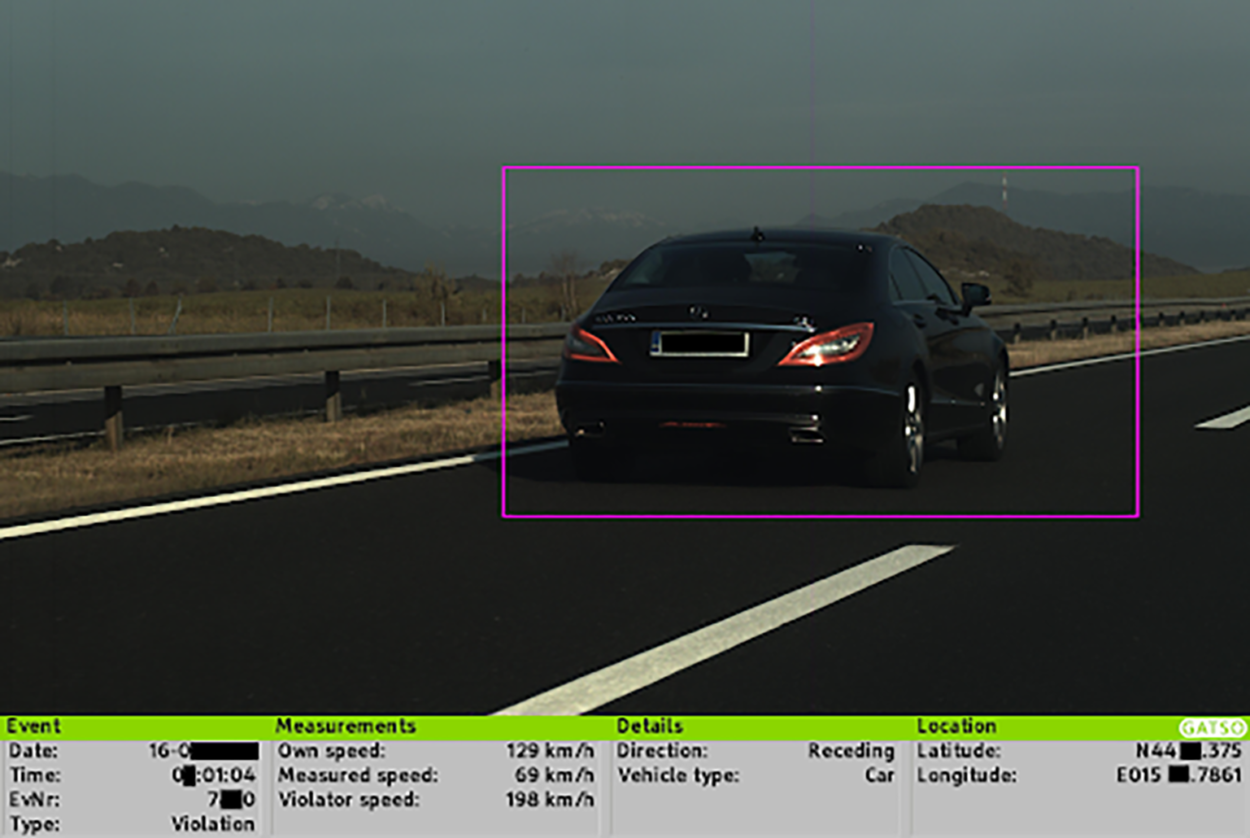
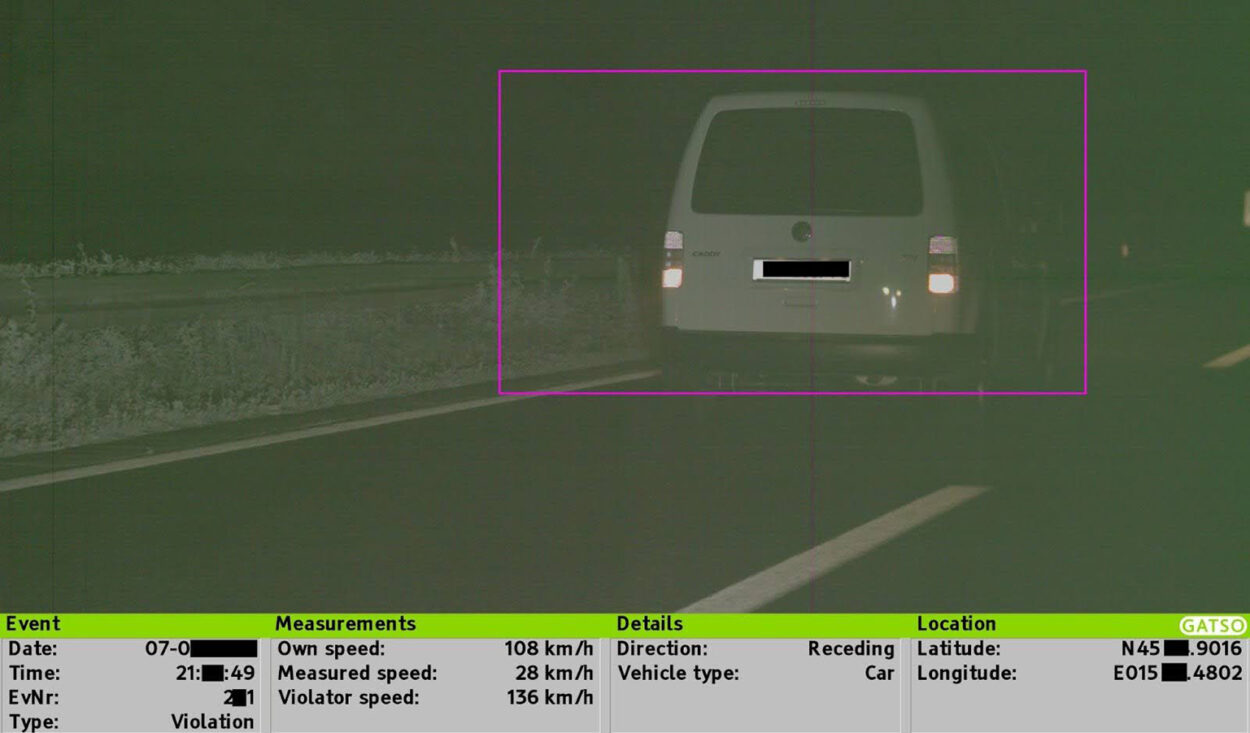
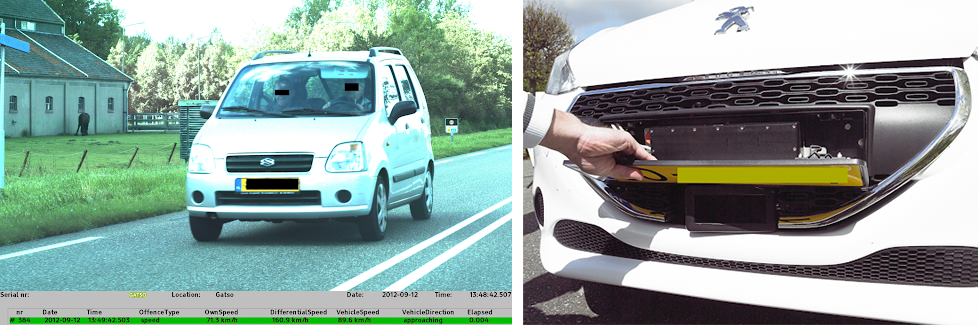
Images: In-vehicle daytime and nighttime violation photos with data bar from Bosnia-Herzegovina
Road Safety Improvements: Evidence and Results
Numerous studies and reports have documented the effectiveness of automated speed enforcement, particularly mobile and covert systems that are both unpredictable in time and location and unobtrusive, and average speed enforcement systems that have a known location but are inescapable.
In France, the introduction of in-vehicle enforcement systems in a limited area led to a 15% reduction in fatalities in the first six months all over France due to an effective nationwide campaign.
Academic reviews have found that speed cameras (including mobile and in-vehicle systems) can reduce collisions by 14% to 72%, injuries by 8% to 46%, and fatalities or serious injuries by 40% to 45% in the vicinity of camera sites.
- The flexibility and unpredictability of in-vehicle systems maximizes the subjective chance of apprehension, leading to optimal road safety outcomes of enforcement.
Conclusion
As an important part of speed management, the combination of overt and covert enforcement at randomly changing locations and times is a crucial and effective road safety measure. This is uniquely addressed by the innovative Sensys Gatso in-vehicle speed enforcement system, especially when deployed covertly in unmarked vehicles with a wide and well synched multi-media publicity campaign. This combination was very successful in France.
The versatile in-vehicle enforcement system, which can be used when parked and while driving for both approaching and receding traffic, significantly enhances the subjective chance of apprehension. This is a key concept for successful traffic enforcement. In combination with an effective targeted road safety campaign to increase awareness among the driving public, this system has shown to be very effective in reducing the average vehicle speed on the road network, thus significantly improving road safety. This drop in the average vehicle speed is particularly crucial on secondary roads, which are both the most dangerous and, in area, the most extensive in any country’s network, making traditional speed management and enforcement methods impractical and costly.
The in-vehicle system has proven its road safety value by effectively increasing the subjective chance of apprehension, resulting in lower speeds and measurable reductions in road fatalities and injuries in France, Saudi Arabia, the Maghreb, Qatar, Bosnia-Herzegovina and other countries. It is gaining further traction worldwide as a critical tool in the ongoing efforts by governments to save lives on the road.
Sources
- https://swov.nl/system/files/publication-downloads/D-2000-11.pdf
- https://www.grsproadsafety.org/wp-content/uploads/2023/05/An-Investigation-of-the-Relationship-Between-Traffic-Enforcement-and-the-Perceived-Risk-of-Detection-for-Driving-Offences-1998.pdf
- https://www.ietl.net/news-details/radar-warning-apps-in-road-traffic-ban-with-backdoors.html
- FMCW - Frequency Modulated Continuous Wave - https://www.radartutorial.eu/02.basics/Frequency%20Modulated%20Continuous%20Wave%20Radar.en.html
- https://www.itsinternational.com/its2/news/sensys-gatso-supply-vehicle-enforcement-systems-france
- https://www.lepoint.fr/automobile/et-maintenant-les-radars-embarques-28-02-2013-1634154_646.php#11
- https://mobile.interieur.gouv.fr/Archives/Archives-des-actualites/2013-Actualites/Radars-mobiles-de-nouvelle-generation
- https://mobile.interieur.gouv.fr/Archives/Archives-des-actualites/2013-Actualites/Bilan-du-premier-semestre-2013-de-l-accidentalite-routiere
- https://www.actiroute.com/reglementation/radars-controles/
- https://ghanaiantimes.com.gh/police-launch-traffitech-gh-to-improve-road-traffic-safety/
- https://thepeninsulaqatar.com/article/23/07/2018/Modern-radar-equipped-patrol-vehicle-to-catch-traffic-violations-launched
- https://www.itsinternational.com/its2/news/sensys-gatso-deploys-vehicle-enforcement-systems-saudi-arabia
- https://www.messengernews.net/news/local-news/2025/02/speed-cameras-return-to-fort-dodge-streets/
Written by Philip J. Wijers, Director Government Affairs, Sensys Gatso Group